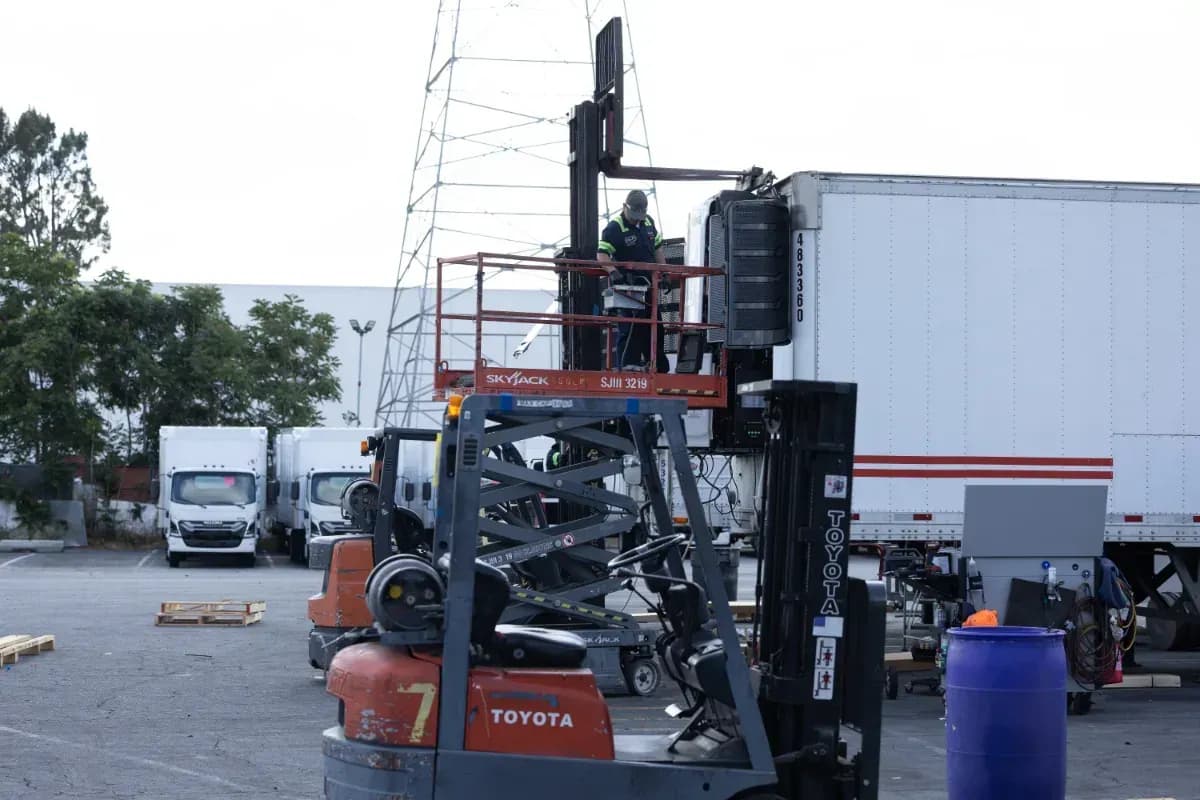
Fleet diesel repair budgeting should start with each truck’s maintenance history, age, mileage, duty cycle, and scheduled service, not a single cost-per-mile target. Repair needs vary across vehicles and work patterns, so industry figures are benchmarks, not fleet-specific forecasts.
ATRI reported that trucking repair-and-maintenance costs rose 8.6% in 2025. A DOE-sponsored estimate puts semi-tractor maintenance and repair at $0.12 per mile in the first vehicle year and $0.57 in the fifteenth, illustrating how age can change the outlook. Under FMCSA’s 49 CFR § 396.3, carriers set routine maintenance intervals based on their vehicles and operations. Use those records and requirements to build a baseline, then reserve room for unexpected truck repairs, downtime, and emissions-system work. Preventive maintenance can help with planning, but it cannot guarantee against breakdowns.
Key Takeaways
- Fleet managers should build diesel repair budgets from each truck’s maintenance history, age, mileage, duty cycle, scheduled service, and actual invoices rather than rely on a single cost-per-mile target.
- ATRI reported that trucking repair-and-maintenance costs rose 8.6% in 2025, while a DOE-sponsored estimate puts semi-tractor maintenance and repair at $0.12 per mile in vehicle year one and $0.57 in year fifteen; treat both figures as benchmarks, not fleet-specific forecasts.
- Carriers should budget preventive maintenance, required inspections, labor, parts, diagnostics, scheduled component work, and unplanned repairs as separate categories, with routine maintenance intervals based on their vehicles and operations under FMCSA 49 CFR § 396.3.
- Fleet managers should track planned and reactive repairs, downtime, and cost per mile by vehicle, review budget variances monthly, and keep reefer unit maintenance separate from diesel truck repairs while accounting for towing, dispatch changes, and other downtime costs.
What Belongs in a Diesel Repair Budget?
A diesel repair budget should account for your fleet’s vehicles, work, maintenance history, and operating needs, not rely on one universal cost figure. Include preventive maintenance, required inspections and records, labor, parts, diagnostics, scheduled component work, and unplanned repairs. Build estimates from each truck’s records, including fleet size, vehicle type, mileage, duty cycle, operating conditions, and past repair work. A truck that spends long hours in stop-and-go traffic may need a different estimate from a highway tractor, even if both have similar mileage. Maintenance records can help identify recurring parts and labor needs, while missing records make estimates less certain. Labor costs depend on the work involved, technician time, and the shop’s billing rate. The U.S. Bureau of Labor Statistics reported a median annual wage of $61,770 for diesel service technicians and mechanics in May 2025. That figure is a worker wage, not a repair-shop rate. Parts and diagnostics also vary by vehicle and fault, so record actual invoices and repair details rather than applying one assumed price across the fleet. Keep diesel truck repair estimates separate from transport refrigeration unit maintenance. A reefer unit has its own service needs and repair history, but both budgets matter when a truck carries temperature-sensitive cargo. A broad cost-per-mile benchmark can help compare estimates or track trends, but it cannot account for a specific fleet’s mix of trucks, work, and repairs.
How Much Should a Fleet Budget?

Set your diesel repair budget by vehicle and cost category, using actual invoices, mileage, maintenance plans, and known upcoming work rather than a single industry figure. The American Transportation Research Institute (ATRI) reported that the average operating cost for for-hire trucking was $2.336 per mile in 2025, up 3.4% from 2024. That figure covers overall operating costs, not just repairs, so it should not be used as a repair-budget formula.
ATRI also reported that repair-and-maintenance costs rose 8.6% in 2025. That increase describes an industry trend, not a prediction that every fleet’s expenses will rise by the same amount. Compare it with your fleet’s own spending by tracking costs for each truck and separating labor, parts, diagnostics, inspections, and scheduled work. Mileage helps put invoices in operating context, while maintenance plans and approved estimates help identify costs already expected during the budget period.
To prepare for unexpected truck repairs, review each vehicle’s prior unplanned work and account for risks reflected in its operating history, age, mileage, and duty cycle. Keep this allowance visible as a separate budget line so managers can compare planned spending with repair invoices as the year progresses. A fleet-wide average provides context, but vehicle-level estimates make it easier to see where the budget may come under pressure.
How Should You Balance Planned and Reactive Repairs?
Balance planned and reactive repairs by funding preventive maintenance, scheduled inspections, and corrective repairs as separate budget categories, then comparing actual spending with the plan. Preventive work makes costs easier to schedule, but it cannot prevent every breakdown or unexpected repair.
FMCSA defines systematic inspection, repair, and maintenance as a regular or scheduled program to keep vehicles safe. Under 49 CFR § 396.3, carriers set routine maintenance intervals because needs vary by vehicle and fleet. Federal rules also include periodic inspection and recordkeeping requirements under 49 CFR §§ 396.17 and 396.21.
Track preventive maintenance and scheduled inspections separately from corrective repairs. For each job, record the truck, date, mileage, work performed, parts and labor, and whether the repair was planned or reactive. This breakdown helps managers see whether spending goes to scheduled service or faults found during operation.
Review the records for repeat failures, repairs that follow missed service, and scheduled work that keeps getting deferred. A recurring defect may point to a repair that needs closer attention, while missed service can make the planned budget less reliable. Compare each truck’s pattern with its maintenance history and operating needs.
Do not set a universal target for the share of planned versus reactive spending. A fleet with frequent unplanned repairs may need to investigate recurring faults or adjust maintenance timing. Another fleet may have a different balance because its vehicles and work differ. Use actual records to judge whether the budget reflects the fleet’s needs and whether planned work is reducing avoidable surprises.
How Does Truck Age Change Repair Costs?

Truck age, mileage, and vocation affect repair forecasts because wear, service demands, and operating conditions differ across vehicles. A U.S. Department of Energy Alternative Fuels Data Center study estimated semi-tractor maintenance-and-repair costs at $0.12 per mile in vehicle year one and $0.57 per mile in vehicle year fifteen. The study’s cost curve was scaled to ATRI data, and the researchers noted that commercial tractor costs can vary as vehicle vocation changes.
Use age and mileage cohorts to compare trucks with similar operating histories, then check how each vehicle’s actual repair records align with the estimates. For example, compare tractors in the same age range, but separate those with high mileage or demanding stop-and-go work from highway units. Review repeat repairs, service records, and approved upcoming component work within each cohort to identify where a truck’s forecast differs from its peers.
Operating demands matter because two tractors of similar age may accumulate wear differently under different duty cycles. A regional truck with frequent starts and stops may not follow the same repair pattern as a long-haul tractor, so mileage alone is not enough to set a forecast. Use each cohort as a comparison point, not a fixed per-mile allowance.
The DOE-sponsored study says a well-maintained semi-tractor engine may last 1,000,000 miles and estimates an engine rebuild costing $20,000–$30,000 around 750,000 miles. These are study estimates, not guarantees or current repair quotes. Actual timing and cost depend on the engine’s condition, maintenance history, and work.
When Should You Repair or Replace a Truck?
Repair a truck when the expected work, its condition, and its remaining usefulness make continued operation a better fit than replacement. Plan to replace it when recurring failures or changing fleet needs undermine that fit. Compare the repair estimate with the truck’s maintenance history, duty cycle, and likely work ahead. A single large invoice cannot show the full picture. Include the cost of downtime, towing, missed work, and possible repeat failures alongside parts and labor. A repair that appears manageable on paper may carry greater operational costs if the truck is likely to return to the shop or cannot cover scheduled work. Review the diagnosis and expected repair scope, then consider how much confidence the available records provide about the vehicle’s condition. A major repair, including an engine rebuild, is one input, not an automatic reason to replace a truck. Weigh it against the truck’s condition beyond the failed component and the fleet’s expected use for the vehicle. Also check whether the truck still fits its assigned route, payload, and cargo-control needs. A tractor that no longer suits the work may be a poor fit even after repair, while a well-maintained truck with a useful role may justify substantial work. Compare the repair path with replacement planning using the same operating requirements, rather than relying on a universal dollar threshold.
What Repair Costs Get Missed?

Often-missed repair costs include towing, downtime, dispatch changes, lost vehicle availability, and the coordination needed to protect temperature-sensitive cargo. A shop invoice may cover diagnosis, parts, and labor, but not transferring a load, arranging a substitute vehicle, revising a delivery slot, or updating a customer. Delayed transit can also affect a cargo-handling plan, although the impact depends on the load and the length of the delay. Record these operational costs separately from repair charges, without assuming every delay results in damaged goods.
Track diesel truck repairs separately from reefer unit maintenance. The truck’s engine, chassis, and emissions systems have different repair needs from the transport refrigeration unit that controls cargo temperature. Separate records help managers see whether a truck repair, a reefer fault, or both are affecting vehicle availability and service planning.
The U.S. Environmental Protection Agency’s 2010 diesel particulate filter (DPF) bulletin says cleaning is typically needed every 6 to 12 months. More frequent cleaning may be needed when particulate emissions are excessive or regeneration is inadequate. Treat that interval as a planning reference, not a universal schedule. DPF condition, engine operation, and maintenance history all affect timing. Include inspection and cleaning needs in the truck’s emissions-system budget, separate from reefer service costs.
Which KPIs Keep Spending in Check?
Keep spending in check by tracking operational KPIs, reviewing budget variances monthly, and using the results to update plans rather than treating any metric as a stand-alone target. A consistent view by vehicle and cost category can reveal whether spending reflects maintenance needs, operating changes, or delayed work.
- Track repair and maintenance cost per mile, preventive maintenance completion, reactive repair frequency, downtime, and spending by vehicle age or type. Review the measures together. A lower cost per mile may not signal improvement if scheduled service is overdue or downtime is rising.
- Compare actual spending with the budget by category, such as labor, parts, diagnostics, and scheduled work. Investigate overruns, and check unusually low spending for delayed repairs, missed maintenance, or incomplete records.
- Review variances monthly to identify repeat faults, deferred work, changing mileage or duty cycles, and cost assumptions that need updating. Note which vehicles and categories drive each variance so the same issue does not disappear into a fleet-wide average.
- Assess maintenance-program return on investment over time by comparing program costs with relevant repair expenses, downtime, and operating outcomes. This comparison can inform decisions, but it does not guarantee savings.
- Use the findings to adjust forecasts and service plans for the next budget period, including the expected work and funding for each vehicle group.
Put Your Fleet Budget Into Action
At your next budget review, create a worklist for each power unit. Record its unit ID, current mileage, open diagnostic findings, approved estimates, next required inspection, and maintenance due date. Mark each item as scheduled, awaiting diagnosis, or unplanned so managers can see which costs are committed and which remain uncertain.
Ask the maintenance lead to obtain itemized estimates for open repairs. Each estimate should separate labor, parts, diagnostics, and any additional work that may be needed after teardown. Ask the repair shop to identify what could change the estimate, when it will seek approval, and how the repair may affect vehicle availability.
Keep transport refrigeration work in a separate line from diesel truck repairs. If a truck carries temperature-sensitive cargo, coordinate reefer-unit service planning with dispatch while the truck is being assessed, and track the two work orders separately.
Use the resulting worklist to decide which repairs need authorization now, which require more diagnosis, and which can wait for a planned service window. Assign an owner to each open item and set a date to revisit it. This gives your next budget check a specific list of decisions, not just a fleet-wide number.
Frequently Asked Questions
1. How should a fleet budget for in-house diesel mechanic labor?
To budget for in-house diesel mechanic labor, use actual payroll costs and account for the time technicians spend on maintenance and repairs. Track labor hours by truck and job, and keep labor separate from parts, tools, training, and other shop costs so managers can compare internal work with outside repair invoices.
2. How can a fleet account for seasonal changes in diesel repair costs?
Compare repair invoices, maintenance work, and downtime across seasons, grouped by truck type and duty cycle. Use those records to plan seasonal inspections and known work, but avoid adding a blanket seasonal increase unless your fleet’s own history supports it.
3. How should a fleet budget for a truck that is still under warranty?
When budgeting for a truck under warranty, separate potentially covered repairs from routine maintenance and costs the warranty may exclude. Review the warranty terms for coverage, exclusions, approval steps, and any cost-sharing requirements, then budget for the work your fleet may still need to pay for.