Choosing between a single-temp and multi-temp reefer depends on whether your freight needs one set point throughout the trailer or separate temperature zones. A single-temp reefer maintains one set point throughout the trailer. A multi-temp reefer uses insulated bulkheads to create independently controlled compartments.
A multi-temp setup can carry compatible frozen and chilled freight, but the usable space in each zone depends on refrigeration capacity and trailer layout. Market estimates for a new 53-foot trailer are $60,000–$75,000 for single-temp and $80,000–$100,000 or more for multi-temp. The FDA Sanitary Transportation rule, 21 CFR 1.908, addresses suitable equipment and adequate temperature control for covered food transport, not a required reefer type.
Key Takeaways
- A single-temp reefer fits freight that shares one set point, while a multi-temp reefer can carry compatible frozen, chilled, or ambient freight in separate zones when the configuration supports each shipment’s requirements.
- A multi-temp reefer’s usable space and temperature control depend on its refrigeration capacity, compartment layout, bulkheads, and airflow, so confirm that each planned load fits its zone before dispatch.
- For a new 53-foot trailer, 2026 market estimates are $60,000–$75,000 for single-temp and $80,000–$100,000 or more for multi-temp; reported multi-temp use averages 3,500–4,000 annual operating hours and about 0.9 gallon of diesel per runtime hour, though actual fuel use varies.
- For covered food transport, FDA rule 21 CFR 1.908 requires suitable equipment and adequate temperature control, and a written shipper-carrier agreement assigning temperature-control responsibility to the carrier requires pre-cooling each mechanically refrigerated compartment to the shipper’s specification.
How Does a Multi-Temp Reefer Work?
According to Thermo King, a single-temp reefer maintains one set point throughout the trailer, while a multi-temp reefer maintains different set points in separate zones.
Insulated bulkheads divide the trailer into compartments and limit heat transfer between them. Evaporators cool the air in their assigned zones, while airflow distributes that cooled air through each compartment. The Carrier Vector 8611MT, for example, uses two evaporators and a center dividing wall to create two independently refrigerated zones. This layout is not universal.
The ASHRAE Handbook, Refrigeration notes that each compartment’s size is constrained by its cooling and heating needs, and the combined load cannot exceed the main refrigeration unit’s gross capacity. Controls let operators choose a set point, or the target temperature for a zone. Telematics can help operators track conditions in each zone and check whether temperatures remain near their targets.
The number of zones and the temperatures a multi-temp reefer can maintain depend on the refrigeration unit’s capacity and the trailer’s configuration. Evaporator placement, bulkhead arrangement, and airflow paths all affect how the setup handles its separate compartments.
What Cargo Fits Each Temperature Setup?

A single-temp reefer suits freight that requires one shared set point. A multi-temp reefer can carry compatible frozen, chilled, or ambient freight in separate zones when its configuration supports those needs. For example, frozen food and chilled produce may travel together only when each compartment can maintain its required conditions.
Insulated dividers take up trailer space, so the cargo volume available in each zone depends on compartment dimensions and how the load is arranged. Refrigeration capacity also limits zone size and load: cooling and heating demands across compartments must stay within the equipment’s available capacity. Airflow matters too, because blocked or poorly distributed air can prevent even temperature control. Cargo requirements should determine which freight shares a trip and how pallets are positioned. Not every combination of frozen, chilled, and ambient goods will work in every multi-temp setup.
Plan Routes Around Reefer Zones
Route efficiency with a multi-temp reefer depends on matching freight to zone capacity, planning the delivery sequence, and finding return loads that fit the temperature zones. A route can consolidate compatible frozen and chilled freight, but a backhaul may not work if its temperature conflicts with a zone, the divider leaves unsuitable cargo space, or cargo requirements prevent sharing compartments. A single-temp trailer is simpler to plan around because one set point applies throughout, though the freight still needs to suit that target.
Shore-power use depends on whether the refrigeration equipment supports an electrical connection and whether the operating location has accessible power. Electric and hybrid multi-temp systems are part of ongoing equipment development, but compatibility varies by equipment and facility. Thermo King unveiled the Advancer-e Spectrum electric multi-temperature trailer refrigeration unit in 2024.
What Do Reefer Types Cost to Operate?

A multi-temp reefer costs more to purchase and has additional refrigeration components to maintain. Carrying compatible mixed freight can make the added expense worthwhile when routes use its zones efficiently.
For a new 53-foot trailer, 2026 market estimates are $60,000–$75,000 for single-temp and $80,000–$100,000 or more for multi-temp. These are estimates, not fixed prices, and purchase cost is only one part of the comparison.
Transport Topics reported an industry estimate of 3,500–4,000 annual operating hours for multi-temp units, with diesel use around 0.9 gallon per runtime hour, or roughly 3,150 gallons per year. Actual fuel use varies with runtime and operating conditions, so this estimate is not a fleet-wide guarantee. Electric equipment may use energy differently, depending on the system and access to power.
Compare fuel or energy use, maintenance needs, and route utilization alongside purchase price. A multi-temp unit’s extra components add service considerations, while combining suitable chilled and frozen freight may help spread trip costs across more loads. A single-temp setup may fit better when freight shares one temperature requirement.
Protect Cargo and Maintain Each Zone
Before dispatch, check each zone’s controls and compare displayed temperatures with the shipper’s instructions. Inspect sensors, evaporators, bulkhead seals, and airflow paths. Use unit controls or telematics to monitor whether each compartment stays near its set point.
Under the FDA Sanitary Transportation rule, 21 CFR 1.908(c), covered food transport equipment must be suitable, maintained, and able to provide adequate temperature control when needed. If a written shipper-carrier agreement assigns temperature-control responsibility to the carrier, 21 CFR 1.908(e) requires the carrier to pre-cool each mechanically refrigerated compartment to the shipper’s specification before offering it for covered transport.
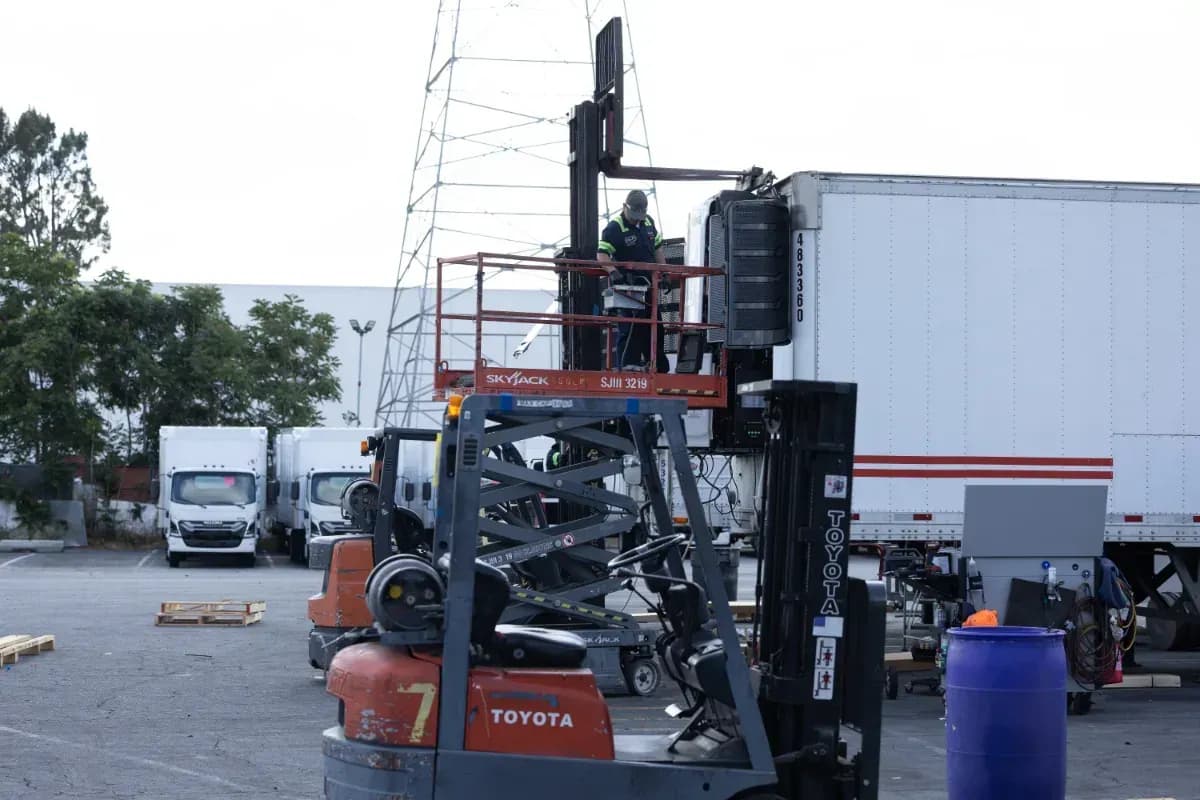
Routine refrigeration unit maintenance should address controls, sensors, evaporators, and seals before faults disrupt temperature management. At Sonsray Fleet Services, we offer authorized Thermo King support, OEM parts, and factory-trained technicians where available. Service offerings vary by location.
Match Reefer Capacity to Your Routes
Before choosing a reefer, map representative dispatches and record each shipment’s required temperature, pallet count, pickup and delivery sequence, and likely return load. Keep the shipper’s instructions with each load rather than relying on broad labels such as “frozen” or “chilled.”
Compare the busiest route with a proposed trailer layout. Mark divider positions, usable space in each compartment, and delivery access, then verify that the zone loads fit the refrigeration unit’s capacity. For cross-border perishable-food transport, check whether the International ATP Agreement’s equipment classification applies. Class C covers mechanically refrigerated equipment maintaining +12°C to 0°C under specified conditions.
Take the route map and cargo requirements to an equipment specialist for a configuration review before committing to a build.
Frequently Asked Questions
1. What temperature range can a Carrier reefer maintain?
A Carrier reefer’s temperature range depends on the specific unit and trailer configuration. Check the model’s operating specifications against each shipment’s required temperature before planning a load.
2. Is Thermo King or Carrier better for a mixed-load route?
Neither Thermo King nor Carrier is automatically better for every mixed-load route. Compare the specific unit’s zone layout, refrigeration capacity, airflow, and usable compartment space with the freight and delivery sequence you need to handle.
3. Can a single-temp trailer be converted to multi-temp?
A single-temp trailer may be convertible, but the right approach depends on the trailer and its refrigeration system. A conversion may require compatible controls, refrigeration components, and insulated dividers. The finished setup must have enough capacity to meet each zone’s needs.
4. What should the temperature difference be between supply and return air?
There is no single supply-to-return temperature difference that applies to every reefer load. The difference depends on the unit, cargo, airflow, and operating conditions. Compare readings with the equipment guidance and investigate unexpected changes.
5. What is the difference between high-, medium-, and low-temperature refrigeration?
High-, medium-, and low-temperature refrigeration describe broad cooling applications, not a universal set of reefer trailer settings. Use the shipper’s specified cargo temperature and the refrigeration unit’s operating range to determine whether a compartment is suitable. Contact Sonsray Fleet Services to ask about Thermo King equipment, parts, or service for your fleet.